Wednesday, October 30, 2013

Each Kid = Different Tastes in Books. Here's How to Cope.

It's easy to forget about reading during the summer and fall. It's beautiful out. There's cross country and soccer. In the summer, we live at the pool and run around outside as much as possible.

You read at bedtime, mostly, or when you're waiting for something else to begin.

And then the days start getting shorter. The gorgeous leaves drop and...and... the pool closes. Books become more appealing. But if your child has "read everything already" and has different tastes from his older brothers and sisters, you may find yourself at a loss. Rather than list books here, though, I'll show you some places to look for endless suggestions. 

Scholastic, of course... it's a site not just for teachers, and not just for ordering books. Scholastic will suggest books by age and to an extent by your child's interest. If your girl is a Big Nate fan, or a Harry Potter fan, there are similar novels out there. You can order directly from Scholastic or try another series at the library, and if your child falls in love, well- you're all set for Christmas!

Amazon.com I know, it's not rocket science. But did you know that Amazon will suggest books by age, genre, and has a listing of children's books that were National Book Award finalists? That Amazon link will take you directly to the children's recommendation page. You can look by age, by season (down farther on the page), or by award winners. Remember, Caldecott is for picture books (usually read aloud to a child), and the Newbery is for juvenile and children's books, more from fourth grade through junior high.

I found it really tricky to find Amazon's list of related children's books, created by a feature they call "Listmania". It's as if there's this secret, hidden feature that you have to know exists. It lurks, it lingers, you think you have it...and then... Nope. You're on some Kindle thing and or ordering some garden implement you don't need.

Back to the home page. But fear not. It's not easy - I spent 13 whole minutes with Amazon.com's wonderful help people but we found it.

Catchy, isn't it? Ok. It's not that bad. First,  go to the home page of www.Amazon.com, and sign in.  Then click on Your Recommendations, at the upper right. Then go waaaay down to the bottom right, and you'll see a column that says Your Participation: 
Click on "Your Listmania Lists" But wait! you say. I have not made any lists yet.  Yes. And you'll be reminded of that. But meanwhile, you can search in the little box next to the word LISTMANIA for any topic that your child might currently be obsessing on, such as dinosaurs or trucks. And most likely, a parent out there has made a list of child-friendly books on this topic. This was a wonderful resource when my nephew was fascinated by trains.

Goodreads.com You need to make an account for this, but it's free. I review books I have read, and connect with friends to learn what they're reading, but for now I posted a request for recommendations for my nine year old nephew. I am always looking for new books for boys, in particular. There's a link there for "Ask for Recommendations", and you are given space to describe exactly what type of book you are looking for. Here's what I put: 

Amy Lesemann wants to read: I need books for my nine year old nephew. He loved the Genius files, by Dan Gutman, and is working his way through the Baseball card series. Despite this - he usually prefers realistic fiction (I know, I know- baseball card = fantasy. So he's not consistent!) :) Amy

Goodreads, like Amazon, has a "listopia" feature that is fun for us adults to browse, as well. There are all manner of lists, goofy and serious. Goodreads features what it considers to be its best, or at least, most interesting lists:


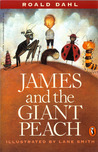
 The Very Hungry Caterpillar by Eric CarleJames and the Giant Peach by Roald DahlHarry Potter and the Chamber of Secrets by J.K. RowlingThe Metamorphosis by Franz KafkaLord of the Flies by William Golding

Best Books About Creepy Crawlies Hmmm. Quite a range here! I'm not actually sure what audience this list maker was aiming for - except maybe for the "best list" list.


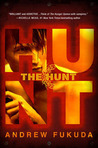
...always good for that moody middle schooler/early teen in your life....

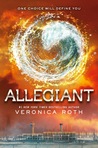
Mockingjay by Suzanne CollinsCity of Ashes by Cassandra ClareHush, Hush by Becca FitzpatrickCity of Glass by Cassandra ClareMarked by P.C. Cast
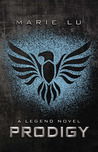
Books That Should Be Made Into Movies

...and then there's the list of Books That Were Better Than The Movies. As in, All Of Them.

Scholastic, though, is also useful for online and hard copy activities for teachers and homeschoolers. If you're interested in doing a little research with your child about what the voyage over was REALLY like for the Pilgrims, or what the clothing looked like, visit the Scholastic Thanksgiving website over the next month or so. There are slide shows, videos, letters to and from settlers.... an amazing amount of material to look at, watch, and interact with. 

So - start now to help your child find books he or she will love, not just tolerate. Teachers, homeschoolers, and parent, there's a lot to learn about on the Scholastic Thanksgiving site. And it's fun, too. 

And learning + fun is the best possible combination.

   Thanksgiving at the Plimouth Plantation....


Monday, October 21, 2013

"Alice" and "Shiloh" author and Newbery Award winner at Literati Bookstore!

I had a thrill that I immediately shared with everyone I could reach, including my 19 year old daughter – Phyllis Reynolds Naylor was coming to Ann Arbor’s Literati Bookstore this past Saturday! Oh, joy! Ecstasy! If the name doesn’t come to mind, she wrote several series of books; the oldest, Shiloh¸ was set in West Virginia, and featured a young beagle and a strong-minded boy, versus the dog’s owner, a hard drinking man living on his own in the mountains.

It would be easy to just hate the man, and love the dog and the boy. But being Naylor, she doesn’t make it that easy. You want the boy to just take the dog and run, but that’s not that easy, either. The boy’s father forces him to confront issues of differing attitudes in the country towards pet ownership (is it a pet, or livestock –with a mission as a hunting dog?). What rights does this man have, as the owner? But then, what rights does the dog have, to food and shelter, and freedom from fear? Naylor wrote about these issues, in the context of poverty and isolation in the mountains of West Virginia, with a straightforward approach that earned her the Newbery Award in 1992.

Naylor writes several series, including The Boys Against the Girls,  the Witch saga, the Bernie Magruder series (The Besseldorf Mysteries), and perhaps her most famous series, the just completed Alice books. Her books are often funny enough to make you laugh aloud and draw somewhat curious stares; like the best young adult and children's literature, they're just good books, and adults enjoy them as much as kids do. The final Alice book, entitled, Now I’ll Tell You Everything, covers Alice's college years, with appropriately adult topics. The only issue is that sometimes the fourth grader who loved Alice in Blunderland may also want to read the book about Alice in college - and this may pose a problem for her parents. It's simply not appropriate, featuring such issues as an attempted date rape. This is a good topic to discuss with middle school students and up, but even with-it Ann Arborite parents may shrink from discussing what exactly is going on in some of the well-written descriptions of what very nearly goes horribly awry for one of the characters. 

 Naylor’s current book tour brought her to Ann Arbor this past Saturday, and she discussed how she had intended for the first Alice novel to be a single book. 

“And then the letters started pouring in,” she said. “And the reviewers said they couldn’t wait to see what happened next.” She decided she would be willing to write a series – provided she would only need to write one a year. “I did not want to be stuck writing a sit-com,” she said. But initially, being consistent with the details was not as easy as it seemed.

“You might notice in the first few books, that Alice has three different birthdates – all in May,” she observed. So the publisher finally hired a researcher/writer to create an “Alice encyclopedia”, which both she and the Alice fact checker/editor could use to insure that all the books were consistent. Does Elizabeth, in fact, have pierced ears? What’s the name of Pamela’s parents? “I used it all the time,” Naylor confessed.

Naylor also observed that the Alice books pop up on the yearly “Most Banned Books in America” lists. “And every time I finished a book, I would stop and think, now what on EARTH could they possibly object to in THIS one? And I never could figure it out,” she said. “But one condition I insisted on with my publishers was that Alice be allowed to grow up, and change from book to book, and so the girls do talk about things that girls talk about, like sexuality and boys. And in one book the girls talk about losing their virginity. So that did get me in trouble.”

There was a low laugh from the audience. And then a little voice piped up from the back of the room. “What’s ‘virginity’?” said a young girl.

And there was a much bigger laugh.

In trouble again, Mrs. Naylor.


Thursday, August 22, 2013

Reading and Writing from the Beginning...

Lyuji and his mother, after working hard!
The six year old approached the desk with a deep sigh. He sat down and buried his head on his arms. "I'm tired," he explained. It had been a long day at summer camp, and he was not keen on the idea of a reading lesson at 4:30 on a lovely summer day.

Lyuji is a bright little boy, learning English as a second language. Learning a second language at this age has its advantages and disadvantages; for example, while English reads left to right, Japanese can be read from top to bottom, or from right to left.

But, unlike English, Japanese does NOT go from left to right.

So when you're six, and trying to learn to read and write in two different languages, it can be pretty confusing. Remember all those b's, d's, p's, q's, and you start to get the picture. Those who are learning just ONE language find all those letters confusing, and when you add another language that goes in two different directions, well - it's not pretty.

Lyuji kept his head on his arms, barely glancing at the colorful aquarium to his left. "Hello, Lyuji," (pronounced U-gee) I said cheerfully. "Would you rather read the words on your word ring first, or read your BOB book?" The BOB books are short, simple books that teach focus on teaching sight words, the words we use most often in reading and speech. They remind parents of a certain age of Dick and Jane books, but the BOB books are physically small and easier to hold in small hands. They are perfect for "emergent", or just beginning, readers, especially those faced with the challenges of learning English as a Second Language at a young age.

He lifted his head with a deep sigh. "Book," he decided. Lyuji has struggled with these books, even though he has had them at home, so I offered to "pre-read" the pages. That means I read the sentence as he points to the word.  Then, once I'd read the sentence, he reads the sentence on his own, again.

But by the end of the book, he was reading the sentences along with me, no longer needing my "pre-reading" assistance. "Excellent!" I said, closing the book. "You've really got this one down, haven't you? Give me five!" He slapped my hand and I got a small, proud grin.

"All right, let's go over your word ring next." While many students have just words on index cards, Lyuji has cards that came with the BOB books. The word, alone, is on one side, and the word used in a sentence, with a picture, is on the other side. Lyuji struggled to read the words, written all by themselves. But when he looked at the sentences and pictures, he was able to read most of the words fairly easily.

"He's using his reading strategies well," I said to his mother. "Did you see how he used the rest of the sentence AND the picture to figure out the word? That's great!  And then he was able to remember the word, and read it by itself on the other side. He's making some real progress."

"I thought he should just be able to read the word, all by itself?" his mother asked.

"We do want him to be able to read the words all be themselves, at some point. Sure. But reading strategies are key. So it's great that when he's stuck, he's able to use the pictures, the other words in the sentence - we call that using context clues - and that's really what a good reader does. Think about how we read a challenging newspaper or journal article. If we don't know a particular word or term, we read the words around it, and perhaps use the pictures in the article, to help us take a smart guess as to what that word might be. He's doing that, now!"

She smiled, "Good! I wasn't sure - "

That's the tricky part of teaching your own child to read. It's not always obvious what's "cheating" and what's really using a good reading strategy. Now that she knows that Lyuji is "allowed" to use the rest of the sentence, and the pictures, she will know that she should encourage that when he reads other stories, as well.

But what about writing? With emergent readers, just forming the letters can be so labor intensive that it's hard to get them to write more than a sentence or two. Without guidelines, their letters and entire words tend to wander around the lines, so that they, too, have trouble reading their own words.

We do want emergent readers to feel comfortable writing down their thoughts and ideas. And just as a baby bird emerges from the shell staggers around a bit, we can expect a certain amount of "staggering" as our new reader learns to write. So we offer some fencing and some hand rails to make the act of writing a bit easier. First, we discuss what he wants to write about. Since the act of creating those letters and words is so tough, we can write down some of his ideas as he lists them, so he can copy some words, and remember what he'd planned to say next. A little interview helps to get ideas flowing - what did you do with your grandparents when you visited? What was your FAVORITE part? I hear you went to a Tigers baseball game. Tell me about it!

And as our young writer expands on the wonders of a visit to indulgent grandparents, or the awesomeness of seeing his first professional baseball game, I write down a central word or idea in the middle of a circle (such as baseball game or grandparent visit!). Then, like rays from the sun, I write down the details that our writer provides, and I probe for those bits of fun such as the goofy baseball hat that was EVEN BETTER than his brother's. Everything goes down.

Second, we organize. Together, we discuss which aspect of the baseball game he would like to describe first - the hot dogs? the home runs? the extra innings? And we number each idea, so that as he writes, whoever might be helping him can remind him what he planned to write about next.

Third, the actual act of writing. This is no minor deal for a young writer who has only just mastered forming the letters of the alphabet. Balancing helping and fostering independence is not easy. In general, the more the child can write on his own, the better off he will be, as he comes to own his writing and gains real pride in his accomplishment. But what about spelling? a parent may ask. Nearly every word there is misspelled! Wouldn't a period or two help? Surely...surely we should be teaching those skills.

Yes, of course - all those skills WILL be taught. But just as we have all written rough drafts with a handful of errors, a young writer will do the same - although perhaps there will be a few more than a handful! The key is insuring that the adult, or assistant, can read what the writer is composing, so that at a later date, the assistant can write a "translation" lightly above the initial scrawl. But how can we insure that these words are at least phonetically decodable, if not accurately spelled?

Before the pencil hits the paper, we rehearse the sentence he will write, in short chunks, if necessary. Then the assistant draws horizontal lines for EACH WORD that our author will write. I am often guilty of making those word lines too short. If this is a problem, I simply join the lines together, and add more at the end. Creating these lines for each word helps the writer space the words appropriately, and at the same time he remembers to keep the letters of the words together. We forget that we had to learn this - that each sentence is composed of a number of word "puzzle pieces", with space between them. Without these lines, an emergent writer's writing often looks like a jumbled, randomly-spaced collection of letters that is very difficult for any reader, the writer included, to read.

And then the sweat and toil begins; initially, Lyuji looked at me helplessly, as I read him the first topic he had chosen to write about. "What sound do you hear at the beginning of the word, We?" I asked him. W always poses a problem, as does H. Their names don't reveal anything about the sounds they make, unlike B-b, and D-d. Double-U? How does that help? Aitch? The names of these words are completely useless to the beginning reader.

But I persisted, as went and was had both been in the book he'd just read sucessfully. He stared at me, and then at the line on the paper. "W-w-w?" he asked.

"Yes!" I said. "Exactly. What's second sound?" I made a tapping gesture at the top of my arm. This kinesthetic, or physical, method of sounding out a word has helped Lyuji. "First, w." I tapped up by my shoulder. "Then ...w-e-e-e. What letter makes that sound?" I tapped by my elbow.

He looked perplexed briefly. "E?"

"Right! That's it! W-e!" I made a swooping gesture from my shoulder down to my wrist. "W-e, We! Go ahead and write w-e! Nice work!" He looked a bit startled at his own success, and with great effort created a w, and then a somewhat scrunched e. He erased that and re-wrote the e clearly.

The next words went a bit more quickly, although still at a somewhat glacial pace. Occasionally he would hear the phonetic chunks of the word but would mis-represent them. I saw his mother raise her eyebrow, and I gestured to her to let it go.

Later I explained. "When we force a student, at the very beginning, to write every single word correctly, they become paralyzed if they can't spell a word. They can't write anything unless they're POSITIVE it's absolutely correct. We want them to think in terms of a first draft. No, this is not perfect. But we will help them fix it, and we WILL teach the right spelling. Just not at the very first moment of creating."

His mother nodded. "Barbara, at his school, does it the same way."

Lyuji sweated through three sentences, spaced evenly and with every letter created roughly accurately. He was exhausted. "You have done a beautiful job! You can finish this at home," I said. "Let's find a fun book to read, and you are finished."

And that was how we always end things - remembering why we're here. We're here so that Lyuji learns that reading and writing give us the good stuff: the funny books, the cool stuff about volcanoes, the sitting together on the cushions, and learning and sharing. He and his mother work together, during the week, and he's getting there, in two languages. Slowly but surely.
see also www.lesemannlearning.com for all of my students' webpages...including Lyuji's!

Monday, July 22, 2013

A Mother-Daughter Pair Who is Doing It Right...


It's so fun when you see the good stuff happening!  So here's a SHOUT OUT to Sarah and Sofia DiPirro, who are new to the Lesemann Learning community. Recently the two of them have been reading a book together that's just a little too hard for Sofia to read on her own. Sofia loves to read a series about horses, given a choice...but she's in sixth grade, and she knows she needs to move along. Her aunt gave her this great book set in Michigan, in the copper mines back in the early 1900's - Living on Sisu -The 1913 Union Copper Strike Tragedy by Deborah K. Frontiera.

It was a little rough reading at first, so initially Sarah read it to Sofia. But pretty soon, Sofia started to read it aloud, too, sometimes reading the paragraph her mother had just read aloud to her.

It still wasn't so easy, even if she had just heard that very same paragraph. There are words in Swedish, but Sofia realized that the words were translated right after they were used in a sentence. Or in the sentence before. "I didn't really need to know Finnish," she said, grinning. "The meaning of the words were right there." Reading the book together taught Sofia many little strategies like that. Don't know a word? Look around. The writer gives you lots of clues to help you along.

"I still read most of it out loud to Sofia," Sarah said. "I enjoy it, and we talk about it. And you know, now I can't fake it, if I mess up a word. She's following right along! Rats!" Sarah grinned.

There's no room for skipping a sentence or two when you're tired, when your kid's got your number. And Sofia's got her mother dead to rights. She's learning about Michigan history, about the Finnish population and girls her age who lived back then. And she's learning how to use the words that she knows to figure out the words she doesn't know.

In other words, she's learning to use context clues, as we say in the reading biz. She watches her mother use them, and when she reads a paragraph aloud, she does it, too.

So - Go, Sofia! and her mighty mother, Sarah! The DiPirros rock some serious historical fiction.

Thursday, July 11, 2013

Summer Reading! Keep the fires burning...

So, confess! How many books have you read, with or without your kids?

No, wait, come back! This is not a “beat the guilty parent over the head” blog.

This is a yes, we’re all in this together and here’s how to cope blog.

If you’re like the rest of us, somewhere around July 4 your good intentions started to slip.  Back in June we informed ourselves that this summer, our children will read the classic kid stories we loved back in the day. Or at least Newbery winners.


Fine. Captain Underpants. But that’s my final offer.

And they definitely WILL learn their multiplication tables by….

Oh, the heck with it.

Who wants to be the bad guy when there are pools on hot, humid afternoons?

So don’t be that guy. Mom. Whatever.

Keep mandatory reading fun. Reading with a parent should never be like eating your vegetables. Don’t ask a lot of questions about the story unless you REALLY want to know the answer. Enjoy the ride!

If you’re going on vacation, repeat after me: books on tape. Or cd.

Ban the DVDs. Ok, at least until you’re into the motel. Let them look out the window and make pictures in their heads while listening to Rick Riordan’s Percy Jackson series or Matt Christopher’s Pitcher with a Glass Arm. And even if you’ve read all the books Harry Potter on cd is an unbelievable listening experience. Fantastically read by Jim Dale! The whole family will seriously love this. Yes. Even your husband. I promise. 

If you’re in a hurry, you’re dismissed. If you have a little time – read on.

With an elementary school age child, you don’t want to go two and a half months without having him or her read to you at all. But be sure to pick an “independent level” book. That’s a book that is comfortable, not challenging, for your child. You’re not his reading teacher (if you homeschool, separate school reading and home reading). Just like shooting baskets alone on a court to get some regular practice, your child needs to read practice and hone those reading skills in a laid-back manner. This also shows your child that reading can be a relaxing time; I call these kinds of books “potato chip books”; these are the kinds of books your child WANTS to kick back with. You can have your child read aloud to you, or relax with a magazine as s/he reads silently. When you’re reading silently yourself, you’re showing that you enjoy reading, too.  

I remember a parent who confessed to reading to her two children when they were in the bathtub. “It was the only time they weren’t moving,” she confessed. “…and I had time to sit down next to them for a little while.” So they came out a little pruney after a 45 minute bath. No big deal. They learned to laugh together, to hang onto the edge of a cliff-hanger for the next installment… and to look forward to the next bath.

Children can understand higher level books when they are listening to the stories because they don’t need to work at decoding the words. They can just focus on the story line. So when they’re not quite ready to read that book on their own, many families enjoy a bedtime book that’s just a bit above their child’s reading level. That way, they’re boosting their child’s reading comprehension a bit, and they’re working on the child’s listening skills, too – that can help a lot in a classroom setting (your teacher will adore you for that, truly).

Books on CD offer many more choices than Harry Potter and Rick Riordan and general fantasy. Since listening to a book is easier than reading it, you’ve got plenty of options for filling their minds with vocabulary they might not encounter for years. Many libraries stock juicy audio books of White Fang (retellings of the classic), perfect when the temps start climbing. 20,000 Leagues Under the Sea, The Invisible Man – terrifying stuff to listen to in a traffic jam!
Novel by HG Wells. Beatiful cover illustration by Damien Fletcher
Pop it into the cd player and away you go. This way, too, you can vary your genres more widely. Before lunch – fantasy. After lunch – nonfiction. Dad picks a biography. Mom picks humor. Kids learn compromise and grudgingly learn about different types of books and start appreciating different read aloud styles.

If there are any “hams” in the car who enjoy reading aloud, you might exploit that member of the family. There are old fashioned books that stand up surprisingly well to being read aloud. Eleanor Estes book wrote a series of books about the Pye family, a middle class family in the early 1920’s.  Ginger Pye revolves around the family dog, who is truly gifted and talented, and the book, while mostly about a loving if eccentric family, does not whitewash some of the social issues in a small town. It’s kid-appropriate – no serious violence, and absolutely nothing above a G rating. The Estes books are all fun, and older kids can read them on their own, while Ginger Pye can be a good read aloud for the end of the day.


Matt Christopher writes sports books for boys and girls, covering every sport right down to tiddly winks. He’s good for an advanced second grader right up through fourth and fifth; the books are fairly easy reads, and you can rely on them to have a satisfying ending. Many of his books, such as Catcher with a Glass Arm and Miracle at the Plate, are geared towards baseball and are at about a second to third grade reading level. Have your fourth or fifth grader read them aloud, though, to avoid stumbling or embarrassment while reading aloud. Christopher’s books feature fairly straightforward kid problems – bullies, sibling issues, and so forth.

If your kids have moved beyond the Matt Christopher sports books, try Mike Lupica, author of Summer Ball and Travel Team. He also appears on ESPN and writes sports columns for The Daily News. He just wrote a book based on Peyton and Eli Manning; learn more at his website.  Lupica’s books feature more worldly issues, such as kids without parents trying to make it without going into foster care, racism, and generally trying to navigate the real world. But he seems to understand the need to present both good guys and bad guys, which makes his books less depressing to read than some. These are books for the junior high and high school set; you might read them along with them. They make for good discussions about the difficulty of making good decisions; it really does get harder as you get older. Lupica introduces the concept of gray, in a world where good and bad used to be black and white.


Girls still have to look specifically for books about girl athletes. Looking down the list of Lupica’s books, and Christopher’s books, there are just not that many that feature girls as the focus. So I googled it, and yes, here’s just such a list. GoodReads is a wonderful app that can help you avoid wasting your time and find the good stuff fast.  http://www.goodreads.com/list/show/15017.Girls_in_Sports  "Whoever said football and girls don't mix hasn't read Catching Jordan. I couldn't put it down " -- Simone Elkeles, New York Times bestselling author of the Perfect Chemistry series 


Not EVERY book on the list is about athletes (Vampire Academy?), but you can use this list to generate your own, and then rate them as you read them – parents and kids as well.

Jon Sciezka, author of The True Story of the Three 
Little Pigs, created a great website for boys, called Guys Read. He features great books you’ve never heard of, especially nonfiction. This month’s pick is…

 A Mostly Accurate Account of Some of Earth's Strangest Animals    


This is the kind of book your kid will probably browse; he (or she) might not sit down and read cover to cover. But you’ll probably hear all about it – maybe in more detail than you…really…want.   Gordon Korman writes both suspense, as in trying to escape from bad guys and deserted islands, and funny books for younger kids (Liar, Liar Pants on Fire).  He also writes books for older kids who maybe buck authority a little more than they ought to (No More Dead Dogs – and no, NO dogs are hurt in the reading of this book. But a few pretentious teachers get their feelings hurt. A bit.)Korman is a writer who touches on almost every note in his different books. Be sure to take a look at the level of the writing and the back of the book. But they are universally well written. 


So – Please read with your children, and to your children. Bring books on cd along on car trips, and save the dvd’s for the motel rooms when you need a quick shower and you don’t want World War III to break out.  Have the actor in your family read aloud, if s/he wants to! Try many different kinds of books, and shoot me an email if your child hates to read…. That’s a challenge I love!

Next blog – nature calls! Ok, that was tacky. But get the kids outside first, and then use some books with great graphics to look up what you found under rocks, in your net, and on that tree.


Tuesday, February 26, 2013

Bella, Getting Focused....


734-994-1896
Email: amy.lesemann@gmail.com


            Several of my students are home schooled, and in general they are quite successful at this. They use a variety of curricula, and most belong to an organization of home schooling families. For some classes, students meet regularly with certified teachers. For other classes, they meet online with teachers and other students. Just how successful the student is, however, depends as much on the student as it does on the material they use.
            About a month ago I interviewed 15 year old Bella. She’s a wonderful sophomore, homeschooled, who said glorious things about me, so there should have been no problem. We discussed, first, how things were B.L.L. – Before Lesemann Learning.
            “I wasn’t focused; I wasn’t really motivated. I felt sort of overwhelmed,” Bella mused. “Even when I was supposed to be having fun, I knew there was this work hanging over me.”
            “Even when you were procrastinating, you weren’t able to get it off your mind?”
             “Yeah! It was just – there. All the time. Now, I get it done. It’s finished. And it’s not bad, really. I mean, I get it done better and faster.”
            “Would you say you like to read…a lot? I mean, I brought you maybe six books, and you zipped right through all of them!”
            She laughed. “It’s a problem sometimes. I’d rather read than work. I get distracted, sometimes.”
            “So, let’s talk about writing, and especially outlining. That really made a difference for you, especially with those biology essays. You had an interesting analogy – do you remember that?”
            She nodded. “Yeah, it’s like a recipe. You sort of start with this basic thing, and you set it all up. When you have that outline set up at first, you kind of get free to add in all those spices, like what you said about all those transition words, and stuff.”
            I did not pay her to say that. Really.
            She sighed, and twirled in her chair. “It’s been such a relief to stop having all that work hanging over me.”
            So where’s the rub, right? I sound like the greatest tutor since maybe Socrates sat in the town square and they fed him the hemlock.
            Then I talked to Bella’s mom.
            Bella’s mom sighed, too. But not with happiness.
            “She’s doing better, yes. But I still have to chase her down.”
            Whaaat?
            “I mean, when she’s working, she’s doing a better job, and she does know how to use an outline, which is really great. But she is still just wandering off! And I have Anthony, who’s 18 months old; it’s just… too much sometimes.”
            Right about then my delusions of grandeur began to crumble.  I brought the two of them together, and posed the question, what exactly is going on?
            Bella was a bit embarrassed. “Well, I still find it hard to concentrate. I mean, I just…” she fumbled for words.  “It’s not that I don’t WANT to, I just…lose focus.”
            I nodded. “In college, I fell asleep every I opened a calculus text book. It got a bit embarrassing after awhile,” I replied. “It was like a learned response. Boom! My head was on the desk, every time.  But something needs to change, obviously.”
            We discussed several options, and settled on a few study strategies that have helped many students over the years.  Bella’s commitment to work would be reinforced by carrots and sticks that Bella chose, with her mother’s encouragement.  If what Bella selected as a stick was not working, her mother would select something a bit more …stick-like. 
            “Since it’s hard to focus on topics you find boring for a long time, set a timer on the computer on her desk for 20 minutes,” I said. “Then, when the timer goes off, get up. Set the timer for a 10 minute break.  Stretch your legs. Walk around, get a healthy snack. Talk to your parents, play with the dog or your brother, and clear out the cobwebs.”
            “When the ten minutes are up, go back to work, and at this point you should be working on something different.  Reset the timer for 20 minutes. When you KNOW you’re only working for 20 minute stretches, it’s much easier to focus.”
            We discussed playing low, non distracting music, having some healthy food to munch on, as well.
            All of these little strategies make school work a bit more pleasant. It also gives Bella more control over her environment. She chooses what music she’ll play. She chooses what healthy snacks she’ll eat, and what she’ll do during her ten minute breaks.
             She will also plan out what work she will tackle, in what order, so that she would mix up her difficult, boring, and more enjoyable subjects.  For my part, I would stay in touch with her and add some web pages that would help her review topics using online games. I’ll also go over how to use flash cards efficiently.
            I provided an excel spreadsheet that would help her keep track of her work, and she promised to use it. Becky, Bella’s mom, looked on approvingly.
            The next week, however, was almost a replay of the previous week.
            “When I work, I do pretty well,” Bella sighed. “But then I don’t. Work, I mean.”
            “She is honest about it, to be fair to her,” her mother interjected. She pulled out the day’s plan. “She admitted that she didn’t do any work at all for 30 minutes. She just read.”
            Could be worse, I thought. She could be on Facebook. But the fact of the matter is…she’s not getting her work done.
            So I lowered the boom. “My concern with homeschooling,” I said to Bella, “Is not the quality of work, or the socializing, or anything like that. My concern is the rigor, the intensity of the student’s effort.” I turned towards Bella, whom I like very much, and respect very much.
            “You are one smart, capable person. But if you keep up like this, when you get out there in the real world, you’re going to get eaten alive.”
            She nodded, a bit solemnly. I kept on like this, in Serious Teacher Mode.  This is a great family, with a bright girl who has a classic 14 year old attitude – why read Plutarch when I really want to read Sisterhood of the Traveling Pants?
            And therein lays the problem with homeschooling. So Bella would need to develop that self control, that self discipline that the rest of us grew when we hit college. We knew that if we couldn’t pull it together then, we flunked out.
            I left her with another, more detailed plan in place. We reviewed her strategies, including plans to contact her teachers, spreadsheets to keep track of when she was working and when she wasn’t, and her promises to get serious.
            I held my breath. Would the third week prove to be the charm?
            One week later, I entered the house through the mud room, patted the dog, Ballou, and stepped over the perpetually ecstatic 18 month old. I found Bella in the study room. The timer was ticking down. She was staring at a book with headphones on.
            It was not The Sisterhood of the Traveling Pants.  
            She looked up, startled. “Oh, hi!” she said. She clicked off the timer.
            “This…” I waved my hand at the screen. “…is good!”
            “Yeah, it’s going pretty well,” she said. “Not perfectly. But ok.”
            “So, let’s go over each subject, and you tell me, on a scale of one to ten, ten being perfect, how the class is going.”
            She gave everything either a six, or an eight.  “So,” I said. “An eight, now, for biology? Why’s it going so well?”
            “I met with the teacher, and she suggested that as I read I take notes in my notebook on what I read, and I put down the page numbers, so I make sure I know what I read! It’s really helping!”
            “Hmmm,” I said. “Seems like I’ve heard that somewhere before.”
            “Oh,” she said, blushing. “You said that, right?”
            “Sometimes it helps to hear it from more than one person,” I said, grinning. “And if it works, it works! What else – you said, an eight in math?”
            “I have a regular teacher in that class, and other kids. So that helps, to, like work on things with them.”
            “Makes sense. But a six in Latin?”
            “I keep looking up the answers, but they’re not sticking! Also, I’m doing that with Mom, instead of like, a regular teacher. That’s sort of…different.”
            We discussed online games that would help, and the following week we would start using flash cards to really get those Latin verbs down.  She would also schedule a time, regularly, to go over the Latin work with her mother, to give it a more official, teacher-like feel.
            So overall, Bella averaged 7.5 out of ten on five classes, according to her self-evaluation.
            I disagreed. Based on how seriously she was taking things, this third week, I think I’d give her more like a 9.
            It was good to see the change in Bella. It would seem as if the act of evaluating herself, determining what worked, and what didn’t work, made all the difference for her. This gave her a sense of control, and put her in the driver’s seat. With a sense of responsibility, she started to feel pretty good about evaluating herself, making some changes, and frankly, the burden of honesty made her commitment to work a bit more serious.
            I left Bella surfing the sites we’d found on deciduous trees, and she looked up to wave good-bye.
            “Let me know if you need any help,” I said, at the door.
            “I will,” she said, eyes returning to the trees.
            “Ok, see you next week,” I said. But I knew my days tutoring this girl were numbered.
            “You’re next, kid,” I said. Anthony grinned and squealed. Ballou just grinned.